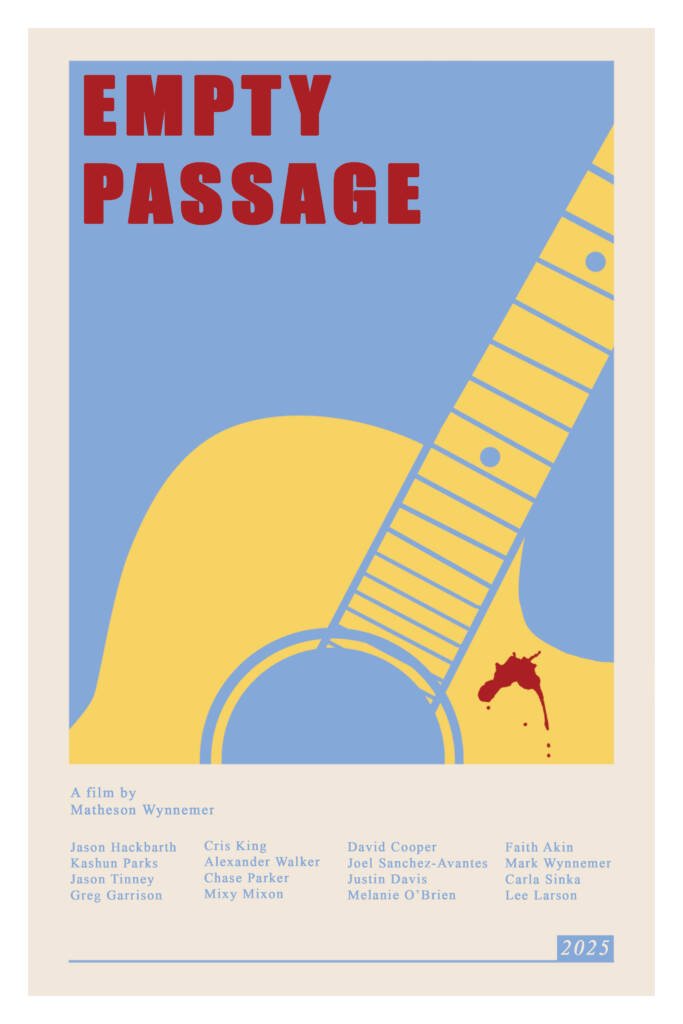
“I don’t feel like the protagonist in my own life,” one of my friends confessed. After hearing her words, I began to wonder what led someone to be a passive character in their own life and how to break that cycle.
Empty Passage follows a young man caught in the repetition of his own life; days that blur together, ambitions deferred, movement without direction. He isn’t unhappy in a dramatic way. He is simply stuck. Comfortable enough to continue to work in a small coffee shop but restless enough to feel the ache of something grand that is missing.
When he is unwillingly pulled into a magical civil war, the story offers escape or confrontation. Within the span of twenty-four hours, he is forced to witness the extremes of belief, power, and consequence on both sides of the conflict. There are no clean heroes here, no simple alignment of good and evil – there are only people convinced they are right, and a cost that reveals itself too late.
At its core, Empty Passage is less interested in fantasy than in inertia. The magic is a device, not a destination. What fascinated me was the way passivity can feel like neutrality, and how quickly that illusion collapses when choice becomes unavoidable. The magic makes everything more dangerous and the war does not ask the protagonist to be brave; it asks him to decide.
I made this project to explore what happens when routine becomes a refuge, and how easily a life can shrink when we mistake stillness for safety. Empty Passage lives in the moment before certainty. The moment where opportunity has presented itself and it is up to you to decide what is next.